
A microscopic parasite is having an outsized summer. Since 1 May 2026, US federal and state health officials have been investigating a fast-growing outbreak of cyclosporiasis, an intestinal illness caused by the parasite Cyclospora cayetanensis, with close to 7,000 confirmed or suspected cases across as many as 34 states and roughly 200 hospitalizations. But the outbreak is not evenly spread. One state, Michigan, is bearing almost the entire brunt.
Key Takeaways
- A major parasite outbreak is spreading across the US. Since May 2026, health officials have logged close to 7,000 confirmed or suspected cases of cyclosporiasis, a parasitic intestinal illness, across as many as 34 states, with roughly 200 hospitalizations.
- Michigan is the epicenter by a wide margin. Michigan alone has reported thousands of cases. In the CDC's lab-confirmed outbreak data, it accounts for 1,141 of about 1,645 cases; the state's own count, which includes suspected cases, has passed 4,300.
- Salad greens are the leading suspect. No single food has been officially confirmed and no recall has been issued, but investigators keep pointing to lettuce and other salad greens as the common item in case interviews. Chains including Taco Bell and Chipotle have voluntarily pulled some menu items.
- It comes from contaminated fresh produce or water. Cyclospora is a microscopic parasite spread through food or water contaminated with feces, not from person to person. It causes prolonged, watery diarrhea and is treatable with antibiotics.
Michigan is the epicenter
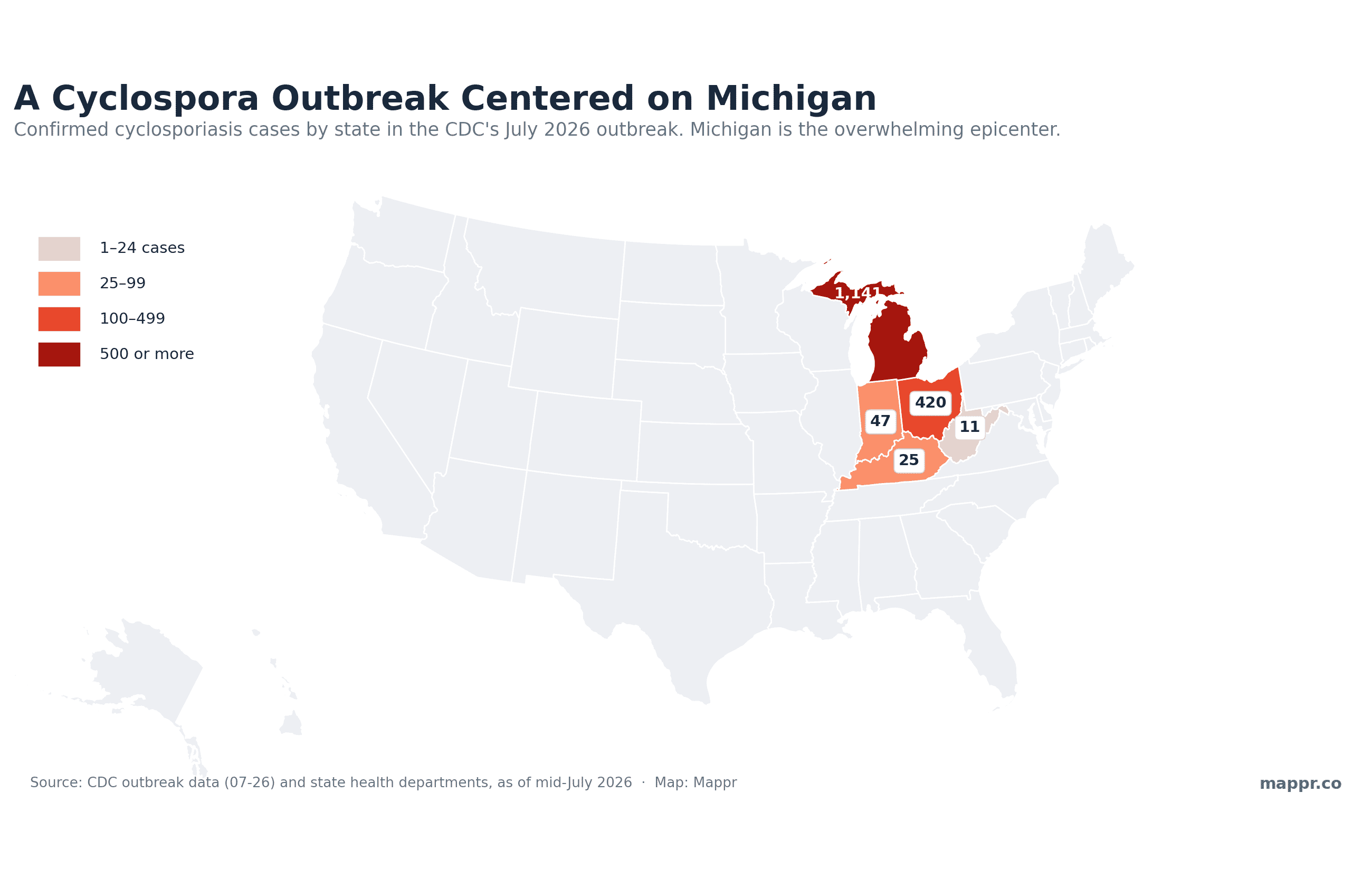
In the CDC’s laboratory-confirmed outbreak data, the illness is concentrated in a tight Midwestern cluster: Michigan (1,141 cases), Ohio (420), Indiana (47), Kentucky (25) and West Virginia (11), about 1,645 confirmed cases in all, with 141 hospitalizations. Michigan accounts for roughly seven in ten of them. The state’s cases have climbed at an alarming pace: reports doubled over a single weekend in mid-July, and its health department says the count has now passed 4,300, more than triple the level of two weeks earlier.
Why the case counts do not match
You may see several different numbers for this outbreak, and they are all correct, because they measure different things. The CDC’s figure (~1,645) counts only cases that have been laboratory-confirmed and reported into the federal surveillance system, which lags reality. Michigan’s own tally (4,300+) includes suspected and probable cases its state labs are working through. And the national estimate of nearly 7,000 across 34 states folds in every state’s confirmed and suspected reports. As the CDC itself notes, the true number is almost certainly higher still, because many people with mild cases never get tested. All three numbers point the same way: a large, still-growing outbreak.
The source: shredded lettuce at Taco Bell
The source has now been identified. On 17 July 2026, the CDC and FDA linked the laboratory-confirmed outbreak to shredded iceberg lettuce served at Taco Bell in the five affected states. The lettuce was supplied by Taylor Farms, which traced it to a single grower in Mexico. Taco Bell voluntarily removed the product from its supply chain. Fresh produce is a classic vehicle for Cyclospora, which is difficult to wash off leaves, and investigators had circled salad greens for weeks before the confirmation: Michigan officials repeatedly said lettuce was the item that “regularly comes up” when they interviewed the people who got sick.
A note on the map This map shows the CDC’s laboratory-confirmed outbreak, which is centred on the Midwest. The broader national surge of cyclosporiasis reaches many more states, but confirmed case counts are reported unevenly and lag the real spread. Cyclospora infections rise every US summer; what makes 2026 notable is the scale and the size of the Michigan cluster. |
What is cyclosporiasis?
Cyclospora cayetanensis is a one-celled parasite too small to see. People catch it by eating food or drinking water contaminated with feces containing the parasite, most often via fresh produce grown or washed in contaminated water. It does not spread directly from person to person. The illness it causes, cyclosporiasis, brings watery diarrhea that can last weeks and relapse, along with cramps, nausea, fatigue and weight loss. It is rarely fatal and is treatable with antibiotics (typically co-trimoxazole), but the prolonged, draining symptoms are why hospitalizations mount. Cases spike in the US every summer, usually tied to fresh produce.
The bottom line
Cyclosporiasis is not new, and it is not the deadliest thing in the produce aisle. What makes the 2026 outbreak stand out is its concentration: a national surge that has, so far, landed overwhelmingly on one state. Now that investigators have identified the food, shredded Taco Bell lettuce, and pulled it from the supply chain, new infections should begin to taper. The practical advice remains the ordinary kind, wash produce thoroughly and watch for prolonged diarrhea, while the confirmed case counts keep catching up with the real spread around Michigan.


